Velutha’s fatal beating at the History House
The God of Small ThingsVelutha’s fatal beating at the History House is the decisive act of police violence in the tragedy: after Baby Kochamma accuses him of attempting to assault her, policemen cross the river and attack him while Estha and Rahel witness the scene. The assault leaves him gravely injured and unlikely to survive. When the children’s account contradicts the First Information Report, the official story is placed in jeopardy; Estha is then asked to identify Velutha and says yes. The episode shows how caste power and institutional authority convert a contested account into punishment, while the children become witnesses to a violence they cannot undo.
Causes and Competing Accounts
The beating follows Baby Kochamma’s report to the police. At the station she describes Velutha as a Paravan worker who had tried to force himself on her niece, Ammu, a divorced woman with two children. She frames the supposed threat as an attack on three women left alone in the house while Chacko was away. The accusation draws on a social order already hostile to both Ammu’s position as a divorced daughter and Velutha’s caste status.
That background is explicit in the family’s history. Velutha had once come with his father, Vellya Paapen, to deliver coconuts at the back entrance of Ayemenem House; Pappachi barred Paravans from entering and from touching what Touchables handled. Mammachi recalls older rules requiring Paravans to erase their footprints and restricting their use of public roads, clothing, umbrellas, and even the direction of their breath. Conversion did not remove the exclusion: Paravans and other communities who joined the Anglican Church faced separate churches and services, while their Christian status later denied them benefits reserved for officially recognized disadvantaged groups. The assault therefore occurs against a history in which caste rules determine access, movement, and credibility.
Baby Kochamma’s account also reaches the police through political calculation. Inspector Thomas Mathew summons Comrade K. N. M. Pillai to determine whether Velutha has Communist backing, wary of provoking the Marxist government despite his own Congress affiliation. Pillai acknowledges knowing Velutha but withholds that Velutha belongs to the Communist Party and had sought him out the night before. He does not challenge the rape allegation, and assures the Inspector that Velutha has no Party protection. The resulting official picture isolates Velutha before the police reach him.
The Police Assault
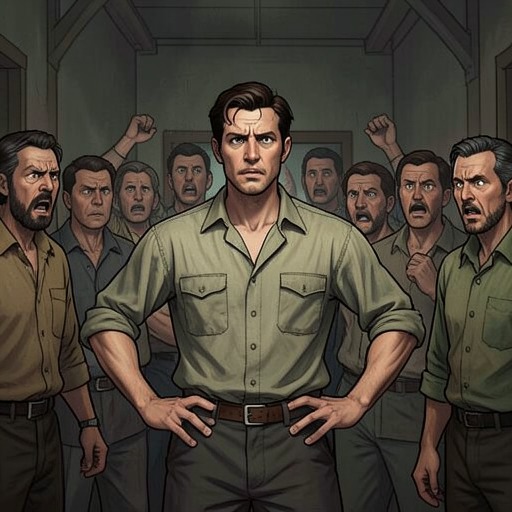
A group of Touchable policemen cross the rain-swollen Meenachal River and make their way through wet undergrowth to the History House, carrying handcuffs. They wake Velutha with their boots. Estha and Rahel wake to the commotion and witness the assault. The narration places their experience within a wider account of human beings seeking ascendancy through structure, order, and monopoly: the violence is presented not as an isolated clash but as power enforcing its hierarchy before children who do not yet understand what they are seeing.
After the beating, the policemen step back to assess what they have done. Velutha’s injuries are extensive, and the narration establishes that he is gravely damaged and at risk of dying. This assessment is not treated as a separate mishap that interrupts the arrest: it is the consequence of the officers’ deliberate assault. The difference between the allegation that brought them there and the physical condition in which they leave him becomes central to the conflict over what the police have done.
The Children’s Account and the Official Record
The police have acted on Baby Kochamma’s First Information Report and caught Velutha. But the children say they left of their own accord, that their boat capsized, and that Sophie Mol drowned accidentally. Their account undermines the claim that Velutha was responsible for abducting or threatening them. The police are consequently left with the prospect of a man dying in custody who, in the account now given by the children, is technically innocent of the accusation behind his arrest.
That contradiction does not immediately free Velutha. The police still have the authority to define the record, while the children are young witnesses whose words arrive after the accusation has already set events in motion. The episode turns on this unequal contest between a report that has been accepted as the basis for action and testimony that challenges its premises only after the violence has occurred.
Estha is later brought to the dark lock-up, where Velutha lies on the floor, and the Inspector asks him a question. Estha’s mouth says yes. The answer is a concrete act of identification, but the circumstances make it an act under pressure rather than an independent, unburdened choice. The light is switched off and Velutha disappears from view. In this sequence, the children’s testimony first unsettles the official account and then one child is made to confirm the police’s identification of the man they have beaten.
Consequences and Narrative Significance
The beating converts caste prejudice into immediate bodily danger and exposes how family and state power reinforce one another. Baby Kochamma’s accusation supplies the police with a rationale; Pillai’s silence removes the political protection that might have complicated their response; the police carry out the assault; and Estha’s affirmative answer becomes part of the encounter’s aftermath. Each step narrows the space in which Velutha’s own account or political standing might matter.
For Estha and Rahel, witnessing the assault is an encounter with the machinery of social order before they can name its significance. The narrative later interprets what they saw as a demonstration of history presenting its hierarchy as though it were a higher purpose. That framing links the scene’s intimate consequence—the children’s forced proximity to violence—to its broader critique of institutions that treat domination as order and a stigmatized man as disposable.
The episode is also bound to the novel’s geography. The policemen cross the same river that separates the children’s world from the History House, turning a boundary crossed by Velutha into a route for state force. In the later present, the History House has become a hotel approached by guests from Cochin by speedboat rather than from Ayemenem by river. The contrast between the police crossing and the modern resort’s controlled arrival underscores the changed use of the place without erasing the history of violence attached to it.